|

|  
|
Astronomers discover 7 new Earth-sized exoplanets that may sustain life
Home » Current Affairs|
|
|
|
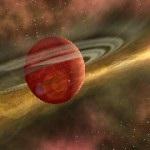
Astronomers from NASA (National Aeronautics and Space Administration) for the first time have discovered seven new Earth-sized exoplanets that may be able to sustain life. The planets were detected using NASA’s Spitzer Space Telescope and several ground-based observatories including Trappist robotic telescope at La Silla, Chile.
Key Facts
These exoplanets are orbiting dwarf star named Trappist-1, which at 39 light years away. They could have some liquid water and maybe supporting life. Of the seven planets, three are classified as TRAPPIST-1 e, f and g. These three planets orbit in the habitable (so-called Goldilocks zone) where temperatures are suited to surface oceans of liquid water. The star Trappist-1 is at least 500 million years old and has a temperature of 2550K. It is marginally larger than Jupiter and shines with a feeble light about 2,000 times fainter than Earth’s sun. The 6 inner planets lie in a temperate zone where surface temperatures range from zero to 100C. Their masses range from around 0.4 to 1.4 times the mass of the Earth. They are so close to each other that their gravitational fields interact with each other. However, their atmospheres needs more study before determining whether they could support some type of life.
|